

Morning Musing on Fat as a Slur and Body Dysmorphia
Luvlies, Good morning. Hope the week has been good to you so far and you’ve had time to enjoy your favourite hobbies. I was watching my usual youtube content of sewing and garment construction, when it dawned on me that body dysmorphia hasn’t been a consistent issue throughout the 20th and 21st century, right? … *flips though old Art History notes*… I mean the concept of being ‘fat’ or BMI (Body Mass Index) might have been concocted in the 1800s, but it wasn’t used in medical assessments for the average man until 1972. It was really a white community thing with no science behind its definition (– must read Fearing the Black Body by Sabrina Strings if you want a better understanding about how society defined health, the body and its beauty). Every community had a term for someone who had curves, like ‘thick’ or ‘big boned’, but the word ‘fat’ as a slur is new.
Come to think of it, department stores of the past didn’t contribute to the dysmorphia either until the 1990s. They used to have live, in-store models, so you could see how the garments would fit a human. Anyone else remember the lunch time fashion shows at the Bay or Eaton’s? I do. OH and do you remember the mannequins in the windows? They closely reflected the body shape of their customer. Up until the 1950s, department stores were for items you couldn’t make yourself like gloves, stockings, accessories and jewelry.
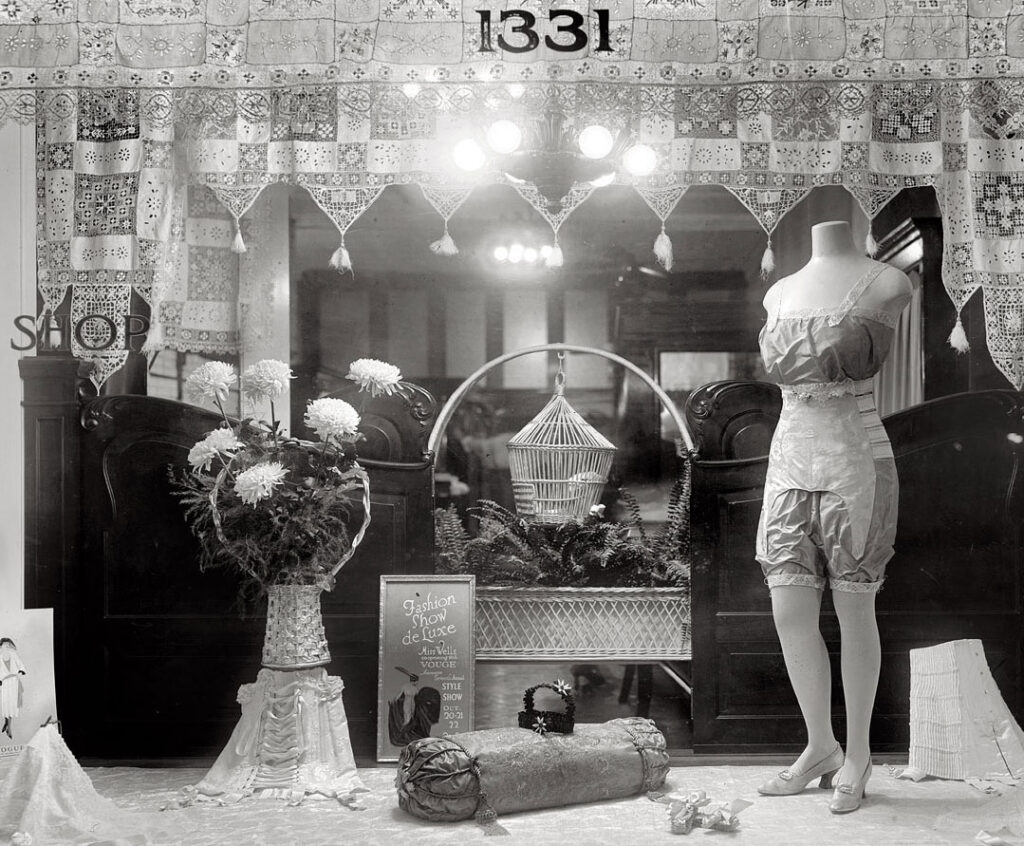
They had a fashion section where very little was off the rack, but you could order the items you wanted. I distinctly remember being measured in the kids change rooms, wearing samples of pants and dresses to be altered, and then coming back later to pick-up my new garments. The expectation for the average Joanna was that she made her garments herself, or had them made for her by a seamstress, a tailor or a cobbler. When I was a kid, I worked closely with costume designers (for rhythmic gymnastics competitions) and seamstresses for to make my wardrobe. I took a summer’s worth of sewing courses and made totes, pillows and shorts.
When it came to how I felt about my body as a yout, I always assumed that I had a more 1950s/1960s shape, which was why my closet was filled with vintage clothing. But when I reflect back on it now, I didn’t have a historical shape. It’s just the clothes were made for an individual, rather than the masses.
If you wanted to have a new dress, Butterick or Simplicity would have something for you. The focus wasn’t on how to look more spry in an outfit, but more about the expense of the fabric and where it came from. That’s when countries started labeling where items were made, because there was caché in the fabrics construction — hence the ‘Made in [insert country]’ clarification on each label. Again, we were not focused on if our bodies were appropriate for the garment, but rather what material to use to make it.
People of the past might have hated their financial status, but people didn’t walk around hating their bodies the way they do now.
…and that’s time. Still here? Share your thoughts on when body dysmorphia started for you and what might have been an influence down below.
See you soon Luvlies!
xoxo Luv Laney Luv
*psst… Don’t forget to like and subscribe to my youtube channel and Patreon.
Morning Musing is a pomodoro-timed, free thought experiment to get back into the swing of things. No Ai added.